du Home Internet Hidden Charges in UAE: What You Must Check Before Buying
Choosing a du home internet plan in the UAE looks simple at first. You see a monthly price, compare the speed, check whether the plan includes wireless or fiber, and then place your order. But many customers later feel confused when the first bill arrives. The reason is simple: the advertised monthly price is not always the final amount you may pay.
This does not mean du is hiding costs unfairly. It means home internet plans can include extra charges, contract terms, VAT, device costs, installation fees, deposits, relocation fees, upgrade or downgrade charges, and early cancellation fees. If you do not check these details before buying, your monthly budget can become higher than expected.
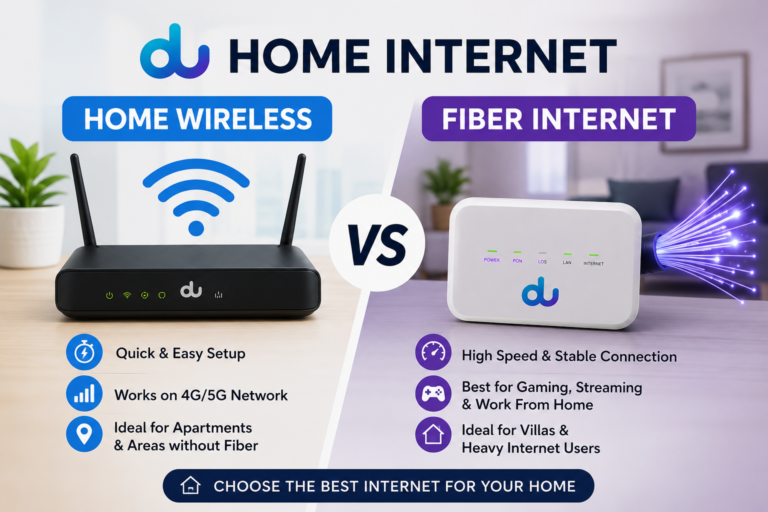
This guide explains the most important du home internet hidden charges in UAE that you should check before ordering a new connection. Whether you are choosing du Home Wireless, du Fiber Internet, or a home internet and TV bundle, this article will help you understand what to ask before confirming your plan.
What Are Hidden Charges in du Home Internet?
Hidden charges are not always “secret” fees. In most cases, they are charges written in the terms, plan details, contract, or first bill information. The problem is that customers often focus only on the monthly package price and ignore the smaller conditions.
For example, a plan may show a monthly price, but your final bill may also include VAT, activation charges, installation charges, device charges, or contract-related fees. Some charges may appear only once, while others may repeat every month.
Before buying any du home internet package, you should ask one clear question:
“What will be my total first bill and total monthly bill after VAT and all extra charges?”
This one question can save you from confusion later.
1. VAT on du Home Internet Plans
VAT is one of the most common extra costs in the UAE. Many telecom services include 5% VAT, and customers sometimes forget to add it when calculating the final monthly amount.
If a package price is shown without VAT, your actual payable amount can be higher. For example, if a plan is advertised at a certain monthly rate, VAT may be added on top of it depending on how the offer is displayed.
Before ordering, check whether the price is VAT-inclusive or VAT-exclusive. Do not assume. Ask the sales agent or check the plan details carefully.
What to check:
Ask whether the monthly package price includes 5% VAT. Also ask whether activation, installation, router, or device charges include VAT or have VAT added separately.
2. Installation Charges
Installation charges can apply when you get a new du home internet connection, especially for fiber internet or home services that need technician setup. Some promotions may waive or discount installation charges, but that depends on the offer available at the time.
This is where many customers make a mistake. They see “free installation” or “discounted installation” in one offer and assume it applies to every plan. That is not always true.
If you are moving into a new apartment or villa, installation may also depend on building coverage, fiber availability, and technical setup.
What to check:
Before placing the order, ask whether installation is free, discounted, or charged. Also ask whether the installation fee will appear on the first bill.
3. Activation Fee
Some internet plans may include a one-time activation fee. This is different from the monthly package price. It is usually charged when the service starts.
The activation fee can make your first bill higher than your normal monthly bill. Many users think the first bill should match the advertised package price, but one-time charges can increase the first payment.
What to check:
Ask if there is a one-time activation fee. If yes, ask for the exact amount and whether VAT applies to it.
4. Router or Device Charges
du home internet plans may include a router, 5G device, or other equipment depending on the package. Sometimes the device is included in the plan. Sometimes it is provided on contract. Sometimes the device cost may be recovered monthly or charged if you cancel early.
This is especially important for du Home Wireless plans because the router or 5G device is a major part of the service.
If the device is free only under a contract, you need to understand what happens if you cancel before the contract ends.
What to check:
Ask whether the router is free, rented, included, or charged separately. Also ask what happens to the router if you cancel, downgrade, or relocate the service.
5. Security Deposit
Some customers may be asked to pay a security deposit depending on the plan, customer profile, payment method, or account conditions. In some cases, deposits may be waived if you register for auto-payment or meet certain requirements.
Many customers do not expect a deposit when they order a home internet package. That is why you should confirm this before the order is submitted.
What to check:
Ask if a deposit applies to your connection. If yes, ask whether it is refundable and what conditions apply for refund or waiver.
6. First Bill Can Be Higher Than Expected
The first bill is often the most confusing bill for new internet customers. It may include more than just the monthly package price.
Your first bill may include:
Monthly package charge
VAT
Installation fee
Activation fee
Device charge
Security deposit
Prorated charges
Add-ons or TV bundle charges
Prorated charges are especially confusing. If your service starts in the middle of the billing cycle, you may see partial charges for the first period plus advance charges for the next cycle.
This does not always mean you are being overcharged. It means the billing cycle may not match the date when your service started.
What to check:
Ask the agent to explain your expected first bill before activation. Do not only ask for the monthly price. Ask for the full first-bill estimate.
7. Contract Duration and Early Cancellation Fee
Many du home internet plans may come with a contract period, often 12 months or more depending on the offer. If you cancel before the contract ends, early cancellation charges may apply.
This is one of the most important costs to check before buying. A plan may look affordable monthly, but if you are not sure you will stay in the same home or continue using the service, a contract can become expensive.
Students, tenants, short-term residents, and people planning to move should be extra careful with contract-based internet plans.
What to check:
Ask the contract length. Then ask the exact early cancellation fee if you cancel after 1 month, 3 months, 6 months, or before contract completion.
8. Relocation Charges When Moving Home
If you move to another apartment or villa, you may need to relocate your du home internet service. Relocation may not always be free. It can also depend on whether du service is available in the new building.
This is a major issue in UAE because many people shift homes due to rent changes, job location, or family needs.
If your new building does not support the same connection type, you may need a different plan. In some cases, technical limitations can affect speed, installation, or availability.
What to check:
Ask whether relocation is free or paid. Also ask what happens if your new location does not support the same du home internet service.
9. Upgrade and Downgrade Charges
Upgrading to a higher plan is usually easier because telecom companies want customers to move to higher-value packages. But downgrading to a lower package can sometimes involve conditions, especially if you are under contract.
If you choose a high-speed plan today and later realize you do not need it, downgrading may not be as simple as expected.
What to check:
Ask whether you can upgrade or downgrade anytime. Also ask whether downgrading during the contract period creates extra charges.
10. Add-ons and Bundle Charges
du home internet plans may include TV, landline, streaming benefits, premium channels, mesh WiFi, extra routers, or other add-ons. These add-ons can increase the monthly bill.
Sometimes customers agree to a bundle because it looks like a better deal. But if you do not use TV channels, premium content, or extra features, you may end up paying for services you do not need.
What to check:
Ask which features are included free and which ones are paid add-ons. Also ask whether any add-on is free only for a limited promotional period.
11. Promotional Price vs Regular Price
Some du home internet offers may include discounts for a limited time. The monthly price may be lower for the first few months and then increase later.
This is not a problem if you know it before ordering. But it becomes a problem when customers think the discounted price is permanent.
What to check:
Ask whether the price is promotional or regular. If it is promotional, ask when the discount ends and what the monthly bill will be after the promotion.
12. Out-of-Bundle or Extra Usage Charges
Most home internet users expect unlimited data. But you should still check the fair usage policy, speed limits, and plan conditions. Some wireless or broadband services may have usage rules that affect speed or performance after heavy use.
Even if the plan says unlimited, unlimited does not always mean unlimited high-speed performance in every condition.
What to check:
Ask whether the plan has fair usage limits, speed management, or any usage-based condition.
13. Late Payment or Reconnection Charges
If you miss a bill payment, your service may be suspended. Reconnection or late payment conditions may apply depending on the account status and policy.
This is not a buying-time hidden charge, but it is still important for monthly budgeting.
What to check:
Ask what happens if payment is delayed. Also ask whether any reconnection fee applies after suspension.
How to Avoid Unexpected du Internet Charges
The best way to avoid unexpected charges is to get the full cost in writing before ordering. Do not depend only on verbal promises. Ask for the plan name, monthly price, VAT details, contract length, first bill estimate, and cancellation terms.
You should also compare your actual needs before choosing a package. If you only need internet for browsing, social media, and video streaming, you may not need the most expensive plan. If you work from home, play online games, or have a large family, then a stronger plan may be worth it.
The goal is not to choose the cheapest du home internet plan. The goal is to choose the plan that gives the best value without surprise charges.
Final Thoughts
du home internet can be a good option for UAE homes, but you should understand the full cost before buying. The monthly price is only one part of the decision. VAT, installation, activation, router charges, deposits, contract terms, early cancellation fees, relocation charges, and add-ons can all affect your total cost.
Before you confirm your order, ask for the total first bill and the regular monthly bill after all charges. Also check the contract terms carefully, especially if you are renting, moving soon, or unsure about long-term usage.
A smart customer does not only ask, “What is the monthly price?” A smart customer asks, “What is the final amount I will pay, and what charges can apply later?”
By checking these details in advance, you can choose the right du home internet plan in UAE with more confidence and fewer billing surprises.